

Practical Bayesian modelling with GeNIe 5.0
Also featuring
Ilya Vorontsov
ICEUR, Vienna, Austria
with
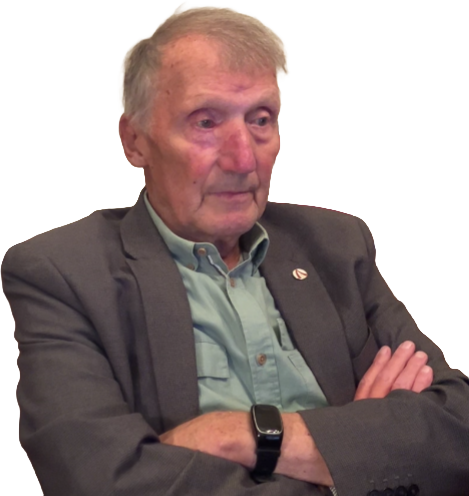
Prof. Hans-Georg HEINRICH
We won’t promise to teach you how to predict the future. We’ll try to figure out what to do when it refuses to cooperate. Again
Challenging the Unpredictable: Robust Decision-Making Under Deep Uncertainty
— free WEBINAR
19:00 CET
ZOOM Online
October 1, 2026

Why Does This Matter?
The question is not only what will happen, but which decisions can remain effective across very different possible futures.
Decisions still have to be made
Sometimes we cannot reliably estimate probabilities, agree on future scenarios, or even be certain that our assumptions will remain valid.
Traditional forecasts don’t always work
More unexpected events, more interdependencies, and more factors whose consequences are difficult to anticipate.
The world is becoming less predictable
What Will We Explore Together?
We’ll look at approaches designed for situations in which a single reliable forecast of the future is simply not available. Instead of searching for one “most likely” future, we’ll ask how decisions can be tested across multiple possible futures - and how to identify strategies that remain effective when our assumptions turn out to be wrong.
3
Why a good decision does not necessarily have to be optimal for one expected future - and how we can look for strategies that perform reasonably well across many different conditions.
Stress-test the decision against the future
Why a good decision does not necessarily have to be optimal for one expected future - and how we can look for strategies that perform reasonably well across many different conditions.
What makes a decision robust?
2
Where ordinary uncertainty ends and deep uncertainty begins - when we cannot confidently agree on probabilities, future scenarios, or even the structure of the problem itself.
When prediction is no longer enough
1

Bayesian Modelling
Decision-Making Under Uncertainty
Decision-Making Under Uncertainty
International Experience
Academic Research & OSCE Missions
Academic Research & OSCE Missions
Political Forecasting
Decades of Research & Practice
Decades of Research & Practice
Political Scientist & Forecasting Expert
Co-Founder, ICEUR-Vienna
Co-Founder, ICEUR-Vienna
Prof. Heinrich is a political scientist, political forecasting expert, and co-founder of ICEUR in Vienna, with decades of experience in international relations, conflict, and political transformation.
His work combines expert political analysis with probabilistic reasoning and Bayesian modelling to support decision-making when the future cannot be reliably predicted.
His work combines expert political analysis with probabilistic reasoning and Bayesian modelling to support decision-making when the future cannot be reliably predicted.
About the Speaker
Prof. Hans-Georg Heinrich
Who This Webinar Is For?
There’s Something Here for Everyone
Banking
Risk, the cost of mistakes, and the consequences of decisions.
Healthcare
Symptoms, possible causes, and the value of new information.
Academia
Dependencies, assumptions, and the logic behind models.
Analysis
Competing hypotheses, changing evidence, and uncertainty.
Management
Decision support, strategy, and choices under uncertainty.
Military
Limited information, conflicting signals, and the need to act before certainty emerges.
The scale of decisions may differ. The logic of working with uncertainty does not.
Get Free Access to the Webinar
WATCH THE webinar
Your data is safe with us.
We only use your information to process your registration.
We only use your information to process your registration.
Prof. Hans-Georg Heinrich
Prof. Hans-Georg Heinrich is a political scientist, political forecasting expert, and co-founder of ICEUR (Institute for the Comparative Study of European and Eurasian Regions) in Vienna.
His academic and professional career spans several decades of research into political systems, international relations, conflicts, and political transformation, with a particular focus on Eastern Europe, Russia, and the post-Soviet space. A central element of his work is the structured analysis of complex political processes and the development of methods for forecasting under conditions of uncertainty.
At ICEUR, Prof. Heinrich has played a key role in developing and teaching approaches to political forecasting based on probabilistic reasoning and Bayesian networks. His methodology combines expert political analysis with formal modelling techniques, transforming complex relationships between political, economic, and social factors into structured models and scenarios.
Prof. Heinrich previously held a professorship at the University of Vienna and has held visiting teaching and research positions at universities and academic institutions in Russia, Hungary, Poland, Iraq, Egypt, and other countries.
Alongside his academic career, he has extensive experience working in international environments, including assignments with the OSCE in Tbilisi, Chechnya, and Belgrade. This combination of academic research and field experience has informed his approach to analysing political instability, conflict, and complex international developments.
He is the author and editor of numerous academic publications on Soviet and Russian politics, Eastern Europe, political transformation, conflict, and international relations.
At ICEUR, Prof. Heinrich brings together decades of experience in comparative politics and international affairs with Bayesian modelling and structured political forecasting, applying these methods to the analysis of complex political scenarios and the systematic assessment of possible future developments.
Prof. Hans-Georg Heinrich & Ilja Vorontsov
Challenging the Unpredictable:
Robust Decision-Making Under Deep Uncertainty
Robust Decision-Making Under Deep Uncertainty
How do we make decisions when the future cannot be reliably predicted?
Under conditions of deep uncertainty, the problem is not simply that we lack information. We may not know the probabilities of future events, we may disagree about possible scenarios, and we may not even be certain which factors will ultimately prove decisive. Yet decisions still have to be made — often long before sufficient certainty becomes available.
In this webinar, Prof. Hans-Georg Heinrich will explore approaches to robust decision-making under deep uncertainty. Rather than searching for a single “most likely” future, we will discuss how to consider multiple possible futures, test decisions against changing assumptions, and identify the conditions under which a chosen strategy may cease to work.
The second part of the webinar will focus on how such problems can be translated into formal models. Ilya Vorontsov will demonstrate practical modelling in GeNIe 5.0 through two examples drawn from very different fields.
In medical diagnosis, a model can bring together symptoms, possible causes, and new evidence, continuously updating the probabilities of competing diagnoses. This example demonstrates how the same framework can work with competing hypotheses, incomplete information, and the value of additional evidence.
The second example will focus on the construction business in Ukraine during the ongoing war. Ilya Vorontsov will demonstrate how a model can help structure decisions when multiple interconnected and uncertain factors must be considered simultaneously — including security, the economic environment, the cost and availability of resources, timelines, demand, and different possible scenarios.
Rather than attempting to predict one “correct” future, the model makes it possible to explore how changing assumptions and new information affect our assessment of the situation — and the decisions that follow from it.
Medical diagnosis and running a construction business during a war may appear to have very little in common. That is precisely why we chose these examples. In both cases, decisions must be made with incomplete information, competing explanations and scenarios must be considered, the consequences of being wrong matter, and conclusions may need to change as new evidence becomes available.
The field changes. The logic of working with uncertainty does not.
Webinar Objective
To demonstrate how decisions can be made and tested under conditions of deep uncertainty — from the principles of robust decision-making to their practical implementation in GeNIe 5.0 models.